
Book Recommendations From a Counselor
As an avid reader, I truly enjoy connecting with clients through shared book recommendations, especially with those who also find comfort, insight, or curiosity in reading. I’ve put together a list of some of my favorite books on therapy and mental health that have been meaningful to me personally and professionally. Each one has been thoughtfully read and chosen with the hope that it may offer support, reflection, or simply a sense of connection to others exploring these topics. These books are not meant to replace therapy but be a support to it. Enjoy!

Attached: The New Science of Adult Attachment and How It Can Help You Find and Keep Love
By: Amir Levine, M.D., and Rachel S.F. Heller, M.A.
Review: I enjoy incorporating Attachment Theory into my counseling practice and find value in helping clients understand how it shows up in their lives. This book offers a clear and accessible explanation of Attachment Theory, particularly in the context of romantic relationships. I also appreciate that it includes attachment style screeners, which I often find helpful to use in session to support clients in identifying and reflecting on their own attachment patterns. I like how this book gives tools and tips on how to spot different attachment styles when dating. My only negative comment for this book is that it can feel discouraging if you are in a relationship with someone that is not a Secure Attachment Style.
Who Would Benefit From Reading This Book: Single Adults, Adults looking to further understand their attachment style, Dating Adults, Therapist who want to learn more about Attachment Theory.
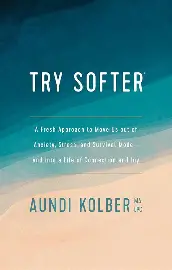
Try Softer: A Fresh Approach to Move Us out of Anxiety, Stress, and Survival Mode and into a Life of Connection and Joy
By: Aundi Kolber, MA, LPC
Review: This is one of my favorite books on mental health. I read it before beginning my counseling education, and I found it to be a clear and accessible introduction to understanding trauma. I also appreciate how it offers practical guidance for moving from survival states toward greater connection, healing, and joy. The author integrates Christian faith with psychological science in a way that was personally meaningful to me. I also found the visual elements of the book especially helpful, as I am more of a visual learner. I often recommend this book to Christian clients who are navigating anxiety or the effects of trauma in their lives.
Who Would Benefit From Reading This Book: Christian adults navigating anxiety or trauma, Chrisitan Counselors

Overcoming Unwanted Intrusive Thoughts: A CBT-Based Guide to Getting Over Frightening, Obsessive, or Disturbing Thoughts
By: Sally M. Winston, PsyD and Martin N. Seif, PhD
Review: I’ve found that many people quietly struggle with unwanted intrusive thoughts, and it’s often something that feels both isolating and hard to talk about. This book does a thoughtful job of normalizing those experiences while offering practical, accessible strategies for working through them. I’ve also found myself using several of the techniques with clients in session. The only drawback I’ve noticed is that some sections can feel a bit repetitive or more drawn out than necessary, but overall the content is very supportive and easy to return to when needed.
Who Would Benefit From Reading This Book: Adults who struggle with unwanted intrusive thoughts, Someone who has someone in their life who battles unwanted intrusive thoughts, Counselors who see clients who often struggle with intrusive thoughts, or OCD.

Adult Children of Emotionally Immature Parents: How to Heal from Distant, Rejecting, or Self-Involved Parents
By: Lindsay C. Gibson, PsyD
Review: This book is a valuable read for anyone who suspects they may have been raised by emotionally immature parents. One of the most impactful features is the section that allows readers to identify and reflect on common experiences and emotional patterns associated with this type of upbringing. I’ve found this particularly helpful in session, as it can bring clarity and validation to clients as they begin to understand the roots of their experiences. I also appreciate the practical guidance the book offers for navigating adult relationships with emotionally immature parents, especially for those who choose to maintain some level of contact.
Who Would Benefit From Reading This Book: Adults who feel they may have been raised by emotionally immature parents.

True to You: A Therapist's Guide to Stop Pleasing Others and Start Being Yourself
By: Kathleen Smith
Review: This book uses Bowen Theory at it's basis to talk through how the family system influences our people pleasing tendencies. I thought that this was a unique approach to addressing people pleasing behavior. I also appreciate how it encourages readers to gently challenge their own thinking while developing greater awareness of both themselves and others. The inclusion of self-reflection questions at the end of each chapter is especially helpful, offering meaningful prompts that can be used for journaling or in-session exploration with clients.
Who Would Benefit From Reading This Book: Adults who struggle with people pleasing, A friend of a people pleaser, Therapist who enjoy using Bowen Theory

Made to Tremble: How Anxiety Became the Best Thing That Ever Happened to My Faith
By: Blair Linne
Review: I really appreciated this book because it is written from the perspective of someone without formal mental health training who personally understands the experience of panic attacks and also has a strong Christian faith. Blair Linne has a way of connecting with readers who may feel overwhelmed by anxiety while offering a grounded, faith-based perspective for engaging with it.
I especially value her balanced approach to integrating faith and mental health, including her rejection of the idea that anxiety can simply be “prayed away.” Her writing affirms both spiritual practice and the importance of understanding anxiety in a more nuanced, compassionate way.
I also found the inclusion of Scripture, poetry, and prayers in the back of the book to be a meaningful resource for reflection and meditation.

Who Would Benefit From Reading This Book: Adult or teen Christians who struggle with anxiety, Someone who is supporting a friend through anxiety, A Christian Counselor
The Invisible String
By: Patrice Karst
Review: This book is a gentle and comforting resource for children who are coping with the loss of a loved one or a pet, or who feel the weight of separation anxiety. It’s a story that can be lovingly shared by parents at home or thoughtfully incorporated into therapy, offering reassurance and a sense of connection. In sessions, it has been especially meaningful for children working through grief or feelings of separation. I like to pair the story with a craft that can help my client express their emotions in a way that feels safe and natural. Patrice Karst’s companion workbook is also a wonderful addition, offering supportive activities that deepen and extend the book’s message.
Who would Benefit From Reading This Book: Children suffering with grief or separation anxiety, Children who are about to attend school for the first time, A counselor who works with children

A Terrible Thing Happened
By: Margaret Holmes
Review: This book tells the story of a young raccoon who has experienced something deeply upsetting. Rather than naming the event, the story leaves space for the reader to reflect on their own experiences, making it easier for children to connect with the raccoon’s feelings and reactions. In therapy, it has been a powerful tool for supporting children who have gone through difficult or traumatic experiences. Many are able to quickly see themselves in the story, which helps them feel understood and less alone. It also creates a gentle opening for conversation, allowing children to share their own experiences at a pace that feels safe and comfortable.
Who Would Benefit From Reading This Book: Children who have gone through a traumatic experience, A counselor who works with children, Parents of a child who have gone through a traumatic experience

The Not-So-Friendly Friend: How to Set Boundaries for Healthy Friendships
By: Christina Furnival
Review: This is a thoughtful and engaging book for helping children understand what healthy friendships look like and how to set clear, respectful boundaries. It introduces these ideas in a way that feels approachable and relevant to their everyday experiences. In sessions, it has been especially helpful for children who are navigating challenging or unhealthy friendships and aren’t sure how to respond. These are such valuable skills to learn early, and it’s a resource I wish I had growing up.
Who Would Benefit From Reading This Book: All children, children specifically struggling with unhealthy friendships or have people pleasing tendencies, A counselor who works with children

Boundaries: When to Say Yes, How to Say No, To Tak Control of your Life
By: Dr. Henry Cloud & Dr. John Townsend
Review: I have found that many of my clients struggle with setting and maintaining healthy boundaries, which is something I have personally struggled with in the past as well. I wanted to read a book that could serve as a helpful resource for my clients, especially those who are Christian. I have noticed that some Christians can have a skewed understanding of boundaries, particularly when it comes to balancing their own needs with caring for and serving others.
This book approaches boundaries through a Christian lens and uses a significant amount of Scripture to support its points. This was one of the aspects I appreciated most, as it helped me understand boundaries from a different perspective and gave me a stronger framework for discussing them with Christian clients. I also appreciated how the authors broke down practical ways to establish healthy boundaries while explaining why boundaries are important for maintaining healthy relationships and personal well-being.
Who Could Benefit From Reading This Book: Christians who struggle with people-pleasing or feelings of guilt around setting boundaries, as well as those who want to learn how to establish healthier boundaries from a Christian perspective.
Comments