
Sand Tray Therapy Explained

Using Sand Tray therapy techniques is one of my favorite ways to help clients process trauma, grief, emotions, and difficult memories. I incorporate sand tray techniques with clients of all ages because it engages both the right and left hemispheres of the brain. The right hemisphere supports creativity, imagination, and emotional expression, while the left hemisphere is associated with logic, language, and organization. By connecting these two ways of processing, sand tray therapy can help clients explore experiences, gain insight, and work through memories and emotions in a meaningful and integrated way.

How it Works
I typically create a sand tray prompt based on what the client is needing to process. For example, if a client is working through a difficult memory, I may invite them to use the figurines on the shelf to create a scene that represents what that memory looks and feels like. Once the scene is complete, I ask the client to explain what each figurine represents and describe the story or experience reflected in their creation. This provides an opportunity for the client to use their right brain when creating the scene and then their left brain when getting to explain the scene to me.
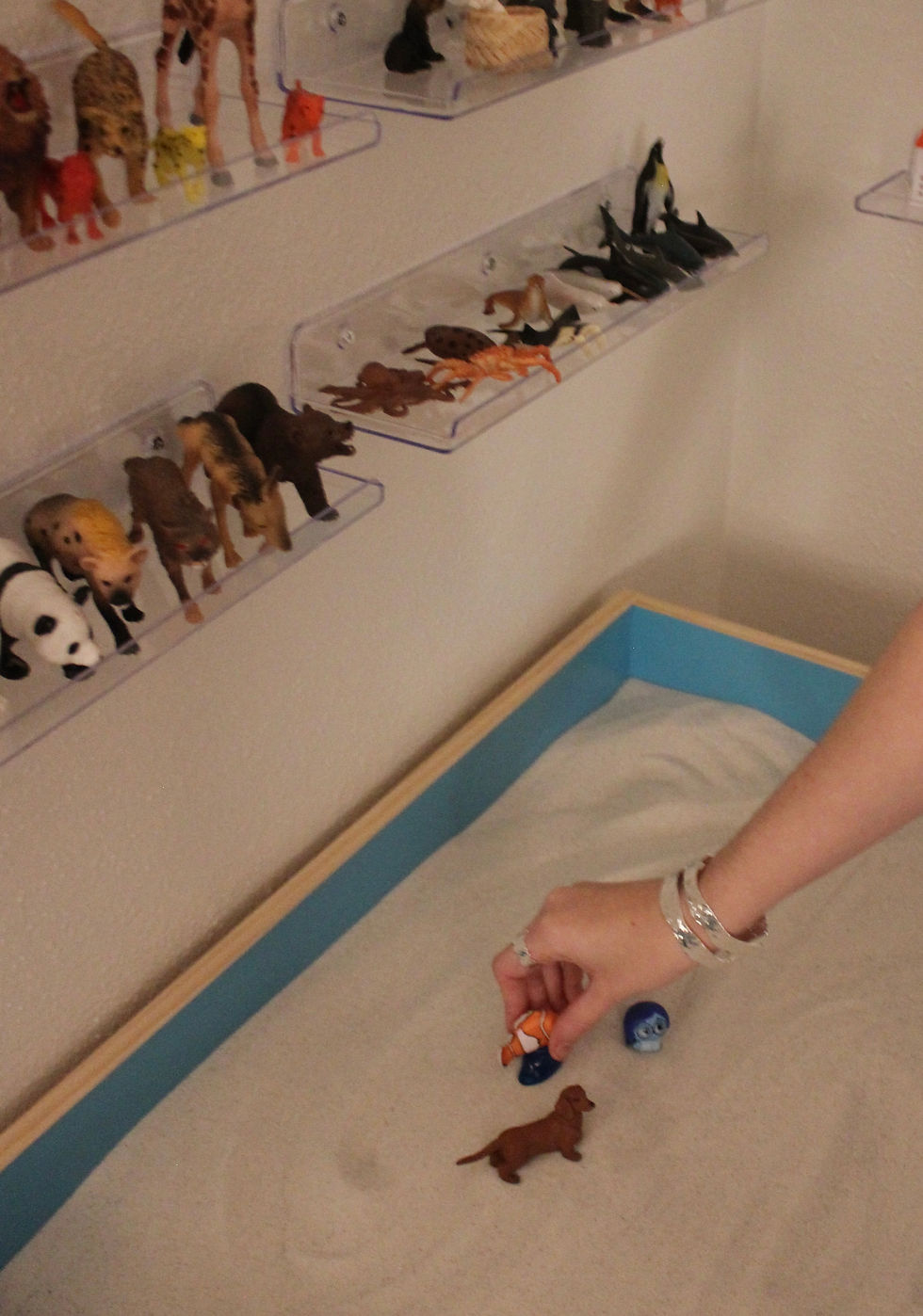
As we process the scene together, I often ask what emotions arise as they look at what they have created. This can help clients identify and express feelings that may be difficult to put into words. As a final step, I may invite them to add, remove, or rearrange elements within the scene to create a greater sense of comfort, safety, or resolution. This can be a particularly powerful part of the process, as it allows clients to view their experiences from a different perspective and, in many cases, reclaim a sense of control and empowerment over difficult memories.
Sand tray therapy is not always focused on processing past experiences. Depending on the client's goals, I may ask them to create a scene that represents their ideal day, what safety looks like to them, or what they hope their future will be. One of the things I appreciate most about sand tray therapy is its flexibility. The prompts can be tailored to each client's unique needs, allowing for a highly personalized and meaningful therapeutic experience.
When working with children, I may use specific prompts to guide the sand tray experience. However, many children naturally gravitate toward the sand tray as a way to express their thoughts, feelings, and experiences through play. Often, they will create scenes that reflect their inner world without needing much direction. This spontaneous form of expression can provide valuable insight into how they view themselves, their relationships, and the challenges they may be facing. A systematic review found that Sand Tray Therapy has been helpful in the treatment of trauma in children and adolescents as well as their internalizing and externalizing symptoms. Benito Herce et al. (2024)
In addition to the symbolic nature of the work, the sensory experience of interacting with the sand can be therapeutic in itself. The tactile qualities of the sand often promote relaxation, emotional regulation, and a sense of calm, making it easier for children to engage in the therapeutic process.
Conclusion
Sand Tray Therapy helps clients express and process emotions, trauma, grief, and life experiences through creativity, symbolism, and play. By engaging both the creative and logical parts of the brain, this therapeutic approach can foster insight, emotional healing, and personal growth for children, adolescents, and adults. It is amazing how "the basic tools of a tray, sand, and miniature figures can indeed make a deep and lasting impact." (Foo et al., 2020)
Citations
Benito Herce, N., Ochoa de Alda, I., & Gonzalo Marrodán, J. L. (2024). Sandtray and sandplay in the treatment of trauma with children and adolescents: A systemic review. World Journal for Sand Therapy Practice, 2(1). https://doi.org/10.58997/wjstp.v2i1.74
Foo, M., Freedle, L. R., Sani, R., & Fonda, G. (2020). The effect of sandplay therapy on the thalamus in the treatment of generalized anxiety disorder: A case report. International Journal of Play Therapy, 29(4), 191–200. https://doi.org/10.1037/pla0000137
Comments